Sr. Transportation Safety Expert — J. J. Keller & Associates, Inc.
Fleet Safety Checklist: Are You Covering All the Bases?
Fleet safety requires more than on-time deliveries—it demands disciplined maintenance, consistent training, strong policies, and defensible compliance. This fleet safety checklist helps you quickly identify gaps that increase risk, citations, and preventable incidents.
Published On: 05/01/2026

Written by:
Daren Hansen
Fleet safety is no game of baseball, but sometimes it can feel like one. You can’t win if you’re focused on only one skill. Successful teams excel at fielding, hitting, pitching, base-running, defending, communicating, and more.
The same is true for fleet safety management. A compliant, incident-resistant operation depends on strong fleet maintenance and inspections, documented driver safety training programs, clear policies, consistent FMCSA and DOT compliance, and data-driven coaching.
Too often, fleets measure success by on-time performance alone. But gaps in vehicle inspections and DVIR processes, inconsistent ELD and hours-of-service compliance, or fragmented fleet risk management can quickly lead to roadside violations, out-of-service orders, insurance claims, and reputational damage.
Use the fleet safety checklist below as a high-level gut check. If some items feel hard to verify quickly — or live in too many spreadsheets, binders, and disconnected systems — that’s usually a sign your commercial fleet safety program needs tighter processes and better visibility.
1. Vehicle maintenance & inspections
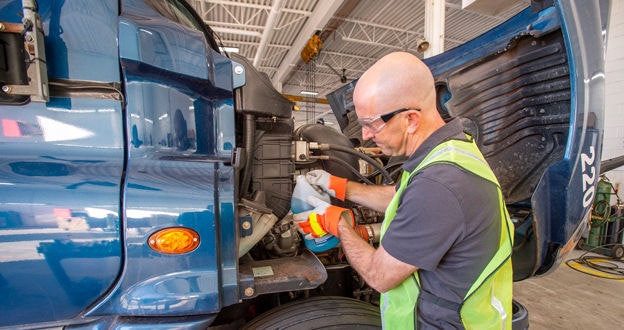
Equipment condition is one of the most visible indicators of a fleet’s safety discipline. A strong maintenance and inspection program should be proactive, documented, and easy to demonstrate during audits and roadside inspections.
- ☐Preventive maintenance (PM) schedules are defined and followed for every power unit and trailer, including time/mileage/hour triggers and documented completion of maintenance activities.
- ☐Driver Vehicle Inspection Reports (DVIRs) are completed correctly, defects are tracked, and repairs are documented with clear sign-off before the vehicle returns to service.
- ☐Annual DOT inspections are scheduled, performed, and retained with records that are quickly retrievable by unit number.
- ☐Roadside inspection trends are reviewed to spot repeat violations, chronic component failures, or process gaps.
- ☐Out-of-service prevention is a routine metric, not just a post-incident discussion.
Common gap: Maintenance data exists, but it’s fragmented (e.g., PMs in one system, DVIRs and inspection documents in others). That makes it hard to see risk early and even harder to prove control later.
2. Driver training
Drivers are your front line, so training must not be a one-time event. It should be an ongoing lifecycle that connects hiring standards, onboarding, coaching, and remediation.
- ☐New-hire onboarding is consistent, including defensive driving expectations, distracted driving policies, hours-of-service basics, inspection habits, and company-specific procedures.
- ☐Training is role-appropriate, customized to the driver’s responsibilities and vehicles (e.g., flatbed cargo securement, hazmat awareness, tanker operation, driving in snow and ice, yard moves, backing, etc.).
- ☐Training completion is documented with dates, topics, instructors, and proof-of-completion that can be produced quickly.
- ☐Remedial coaching is triggered by indicators such as preventable incidents, telematics data, roadside inspection issues, or customer feedback. It should be documented the same way as other training.
- ☐Supervisors and trainers are aligned on what “good” looks like so coaching and training are consistent across terminals.
Common gap: Training occurs, but documentation is inconsistent. When an event happens, teams scramble to prove that policies were communicated and skills were verified.
3. Policies & procedures
Policies only reduce risk when they are clear, current, and reinforced in day-to-day operations. If the safety manual is outdated, or if drivers can’t find the answer quickly, policy becomes a liability instead of a control.
- ☐Core safety policies are documented and reviewed regularly, covering such issues as distracted driving, seat belts, speed, following distance, fatigue management, substance misuse, inspections, incident reporting, and disciplinary guidelines.
- ☐Procedures define the “how,” not just the “what.” For example, what a driver must do after a roadside inspection or after identifying a defect.
- ☐You have version control so you can show what policy was in effect on a given date.
- ☐Employee acknowledgements are captured and retained, including when policies change.
- ☐Policies connect to training and enforcement, so expectations are consistent across departments (dispatch, maintenance, HR, and safety).
4. Telematics & data-driven coaching
Telematics can be a powerful safety tool, but only if it drives behavior change. The goal isn’t to collect more data, it’s to turn data into coaching, accountability, and trend insight.
- ☐Safety-critical events are defined (e.g., hard braking, speeding, following distance, lane departure, handheld phone use, etc.). When a driver operates outside a defined parameter, it’s known as an “exception.”
- ☐Exception review has an owner and a regular cadence (daily/weekly) so risky behavior is addressed quickly.
- ☐Coaching workflows are documented, including how events are validated, how conversations are recorded, and when escalation happens.
- ☐Trends are analyzed by driver, route, terminal, and equipment to identify systemic issues (not just individual performance).
- ☐Drivers understand the “why” behind monitoring. Usually, it’s risk reduction, not “gotcha.”
Common gap: Fleets generate a high volume of exceptions but don’t have a consistent way to triage, coach, and document follow-through.
5. DOT compliance
Compliance is more than passing a check-the-box audit. It’s the day-to-day discipline that keeps you inspection-ready and reduces the risk of enforcement actions that interrupt operations.
- ☐Driver qualification (DQ) files are complete and current, with processes for monitoring expirations and required reviews.
- ☐Hours of service (HOS) and electronic logging device (ELD) processes are consistent, including edits, unidentified driving, supporting documents, and coaching for recurring issues.
- ☐Drug & alcohol testing program requirements are managed, including pre-employment, random, post-accident, reasonable suspicion, return-to-duty, and follow-up procedures, as applicable.
- ☐Accident registers and incident documentation are maintained and reviewed to identify preventability and needed corrective actions.
- ☐Record retention is understood and executed, and records are quickly retrievable when requested.
Common gap: Compliance tasks are completed but they’re managed across various systems (email, paper, websites, spreadsheets), making it difficult to spot what’s missing until an audit or an incident forces the issue.
6. Building a culture of safety
Culture is what happens when no one is watching. It’s also what determines whether your policies and tools actually produce safer decisions.
- ☐Leadership is consistent in the message that on-time performance matters, but not at the expense of safe operations or regulatory compliance.
- ☐Near-miss and hazard reporting is encouraged and handled without blame, and is paired with real follow-up so employees trust the process.
- ☐An employee recognition program reinforces safe behavior (not just miles driven), and coaching is viewed as skill-building, not punishment.
- ☐There’s cross-functional alignment so safety isn’t siloed: operations, maintenance, HR, and safety share the same goals and metrics.
- ☐Continuous improvement is built in through regular reviews of claims, roadside inspections, preventable incidents, and training outcomes.
In baseball, errors happen when responsibilities are unclear or communication breaks down. In fleet operations, safety gaps emerge when fleet compliance best practices are spread across paper files, spreadsheets, and siloed systems, making it difficult to answer a critical question: Are we current, compliant, and defendable—and can we prove it?
Even fleets that pass audits may still struggle with accident prevention, inconsistent documentation, or reactive safety processes. A centralized approach to fleet safety management helps connect the dots between maintenance oversight, driver safety training, ELD and hours-of-service compliance, policy enforcement, and telematics-driven insights—allowing safety teams to reduce risk, strengthen transportation safety compliance, and spend less time chasing paperwork and more time preventing the next incident.
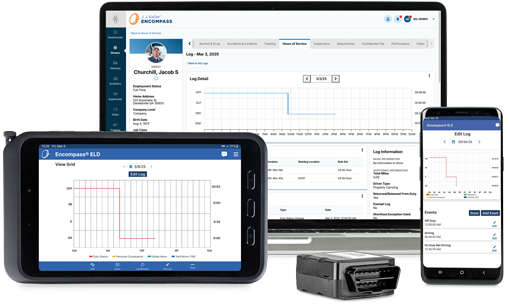
Try J. J. Keller's Quick Comply Program
Are you looking to change your ELD provider? We make it easy with our Quick Comply program. Plus, get a 60-day trial of the Encompass Fleet Management Platform.
You may also enjoy the following articles:
Sign up for our newsletter!
We'll help you stay on top of regulations, best practices, and fleet industry news. Sign up to receive a monthly email notification with links to our most recent blog articles, free resources, and event invites.